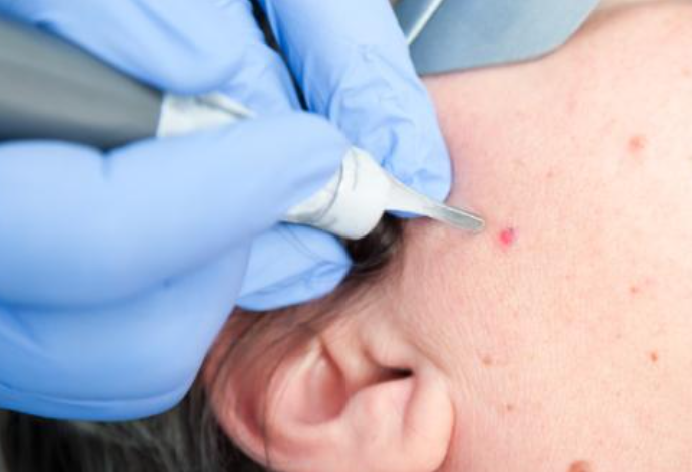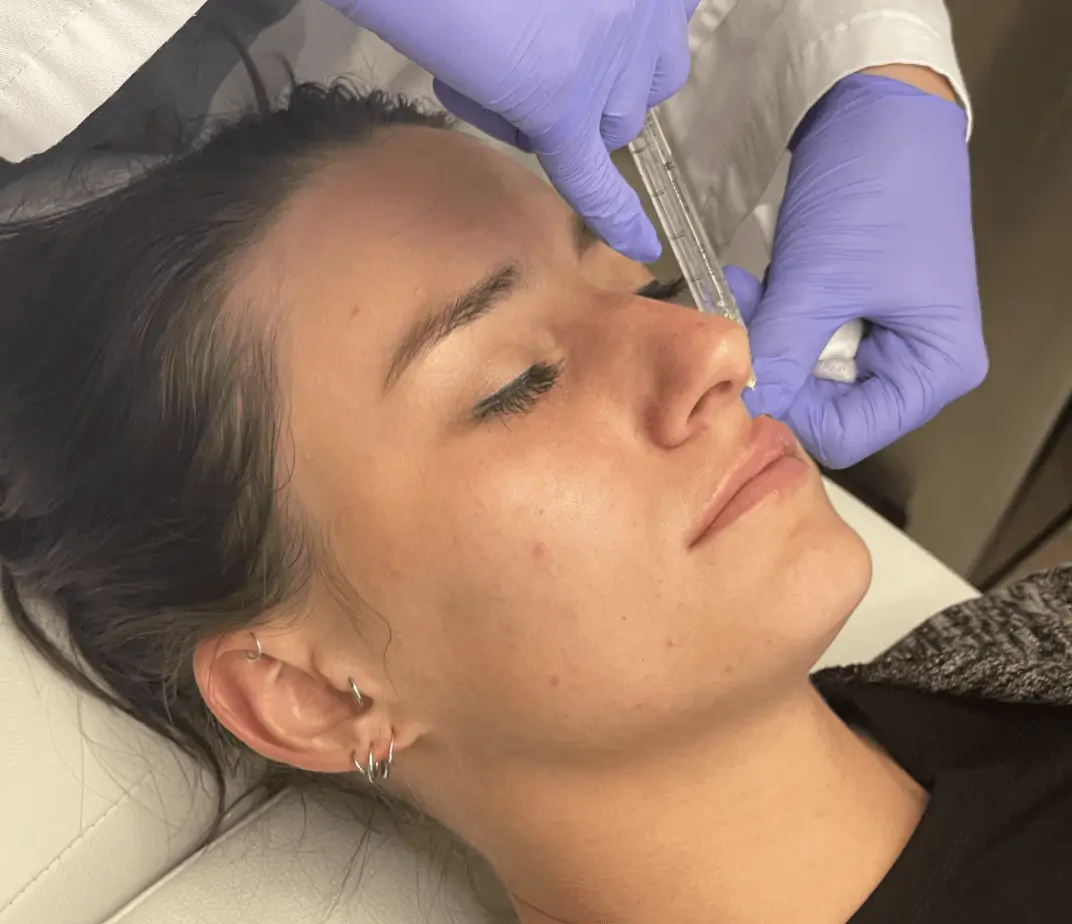
Most people notice a sebaceous cyst long before they ever mention it to a doctor. It shows up as a small, round bump under the skin — usually on the face, neck, scalp, back, or chest — and for months, sometimes years, it just sits there. Then one day it's bigger. Or sore. Or it bursts and refills. That's usually when patients at our Meridian and Boise offices finally ask the question: does this actually need to come out?
The short answer is that not every cyst requires removal, but growing, recurring, or irritated ones almost always do. Here's how to tell the difference, and what actually happens during the visit.
**What a sebaceous cyst actually is**
True sebaceous cysts (technically called epidermoid or pilar cysts, depending on where they originate) form when keratin — a protein your skin normally sheds — gets trapped beneath the surface instead of shedding away. The trapped material builds up slowly, creating a sac that fills with a thick, cheesy substance. They're benign, they're common, and they're not caused by poor hygiene, no matter what your skin care routine looks like.
What makes them frustrating is their unpredictability. A cyst can stay pea-sized for years and then suddenly double in size over a few weeks. It can rupture, drain on its own, and then come right back because the sac underneath is still intact. This is the part patients misunderstand most often: squeezing it or letting it pop doesn't remove the problem. The capsule that produces the buildup is still there, which is why the same cyst keeps returning in the same spot.
**Can a dermatologist remove a cyst? Yes — but technique matters**
Can a dermatologist remove a cyst permanently? In most cases, yes, but how does a dermatologist remove a cyst correctly is the more important question. The method matters more than most patients realize.
A simple drainage — lancing the cyst and expressing the contents — might relieve pressure temporarily, but it leaves the capsule wall behind. Without removing that wall, recurrence is common, sometimes within weeks. Proper surgical excision removes the entire cyst sac through a small incision, closed with sutures. This is the version that actually prevents the cyst from coming back in that location.
At Treasure Valley Dermatology, our providers assess the cyst's size, location, and whether it's actively inflamed before deciding on the right approach. A cyst on the scalp behaves differently than one on the jawline or back, and the removal technique is adjusted accordingly to minimize scarring and protect nearby structures.
**Will a dermatologist remove a cyst on the first visit?**
This depends entirely on the cyst's condition at the time of your appointment. If the cyst is calm — not red, not actively draining, not acutely inflamed — many patients are candidates for excision at that same visit. This is often the best scenario, since it means one appointment instead of two.
If the cyst is inflamed, infected, or has recently ruptured, your dermatologist will typically recommend treating the inflammation first (sometimes with a short course of antibiotics or a drainage procedure) and scheduling the full excision once the area has calmed down. Removing a cyst surgically while it's actively inflamed increases the risk of incomplete removal and a less favorable scar, so waiting a few weeks for the tissue to settle is usually worth it.
This is also why self-diagnosing from a photo online isn't reliable. What looks like a straightforward cyst can sometimes be something else entirely — a lipoma, an abscess, or in rare cases something that warrants a closer look, similar to how seborrheic keratosis can be mistaken for other skin growths until examined in person.
**Signs it's time to stop waiting**
A cyst doesn't need to be removed just because it exists. But certain changes are a clear signal to get it evaluated rather than keep watching it:
- It's grown noticeably over the past few months
- It's become tender, red, or warm to the touch
- It has ruptured more than once
- It's in a spot where clothing, a bra strap, or a collar causes repeated irritation
- It's affecting how you feel about your appearance, especially on the face or neck
None of these mean something dangerous is happening — cysts are overwhelmingly benign. But recurring irritation increases the risk of scarring and infection over time, and a cyst that's already causing problems typically won't resolve by waiting longer.
**What the removal visit actually looks like**
For a straightforward excision, the process is more routine than most patients expect. The area is numbed with a local anesthetic, a small incision is made, and the entire cyst — sac and contents — is removed as one piece. The incision is closed with sutures, and most patients are back to normal activity within a day or two, with stitches typically removed about one to two weeks later depending on location.
Larger cysts, or those in cosmetically sensitive areas like the face, may call for a bit more planning around incision placement to keep the resulting scar as inconspicuous as possible. This is one of the advantages of having the procedure done by a board-certified dermatologist rather than attempting at-home drainage — proper technique directly affects how the area looks once it's healed.
**Cysts vs. lipomas: why the distinction matters**
Not every under-the-skin bump is a sebaceous cyst. Lipomas — soft, slow-growing fatty lumps — can feel similar but sit deeper and are made of fat tissue rather than trapped keratin. The removal approach differs slightly between the two, which is part of why an in-person exam matters more than guessing based on symptoms alone. Our cysts and lipomas page goes into more detail on how these two are distinguished and treated.
**Getting it evaluated in Meridian or Boise**
If you've got a bump that's been growing, recurring, or just bothering you, it's worth getting it looked at rather than continuing to monitor it indefinitely. Our dermatologists at both the Meridian and Boise locations evaluate cysts regularly and can usually tell you during the visit whether same-day removal makes sense or whether a short waiting period is the better path. Either way, you'll leave with an actual plan instead of another few months of wondering.